Looks like you're in [country-name]. Switch to the [site-name] for local equipment and services?

Go to [site-name]
Stay here

User account menu

  • 844.873.4948
  • English

    Australasia

    • Australia

    Europe

    • Français
    • Deutsch
    • English
    • Nederlands

    North America

    • English
    • Español
    • Français
  • Sign In / Register
United Rentals Home
  • Rent
    • All Equipment
    • Popular Rentals
    • Scissor Lifts
    • Boom Lifts
    • Telehandlers
    • Mini Excavators
    • Skid Steers & Track Loaders
    • Rental Resources
    • Rental Protection Plan (RPP)
    • Why Rent with United Rentals
  • Buy
    • All Used Equipment
    • Popular Used Equipment
    • Buy Forklifts
    • Buy Scissor Lifts
    • Buy Boom Lifts
    • Buy Mini Excavators
    • Buy Compressors
    • Buying Resources
    • Financing
    • United Guard™
  • Total Control
    • Account Dashboard
    • Invoices & Payments
    • Items On Rent
    • UR Mobile App
    • About Total Control®
  • Invoices & Payments
    • Invoices
    • Lien releases
    • Apply for credit
  • Locations
    • Find a Location
  • Training
    • Course Catalog
    • Training Credentials
    • United Academy
    • About United Academy
    • Care & Support
    • United Academy - Course Catalog
  • Solutions
    • Worksite Performance Solutions™
    • Specialty Solutions
      • Commercial Trucks
      • Flooring & Facility Solutions
      • Power & HVAC
      • Climate Solutions
      • Fluid Solutions
      • Trench Safety
      • Reliable Onsite Services
      • Tool Solutions
      • Storage Containers & Mobile Offices
      • Communications
      • Industrial Blinds
    • Power & HVAC
    • Climate Solutions
    • Fluid Solutions
    • Trench Safety
    • Trench Engineered Systems
    • Reliable Onsite Services
    • Tool Solutions
    • Storage Containers & Mobile Offices
    • Temporary Industrial Tents
    • Commercial Trucks
    • Flooring & Facility Solutions
    • Ground Protection Matting Solutions
    • Industry Solutions
      • Energy & Utility
      • Chemical
      • Oil & Gas Refining
      • Oilfield Services
      • Civil and Infrastructure
      • Restoration and Remediation
      • Government Solutions
      • Agriculture
    • Energy & Utility
    • Data Centers
    • Renewable Energy
    • Chemical
    • Oil & Gas Refining
    • Oilfield Services
    • Restoration & Remediation
    • Civil & Infrastructure
    • Government Solutions
    • Events & Entertainment
    • Emergency Solutions
    • Emergency Response
  • Services
    • Digital Solutions
    • Total Control®
    • Mobile App
    • Notifications
    • Benchmarking
    • Wedge
    • Downloadable Catalogs
    • Repair & Maintenance Services
    • Owned Equipment Service
    • Rental Equipment Service
    • Training Services
    • United Academy
  • Safety
    • Safety Training
    • Safety Articles
  • Company
    • Resource Center
    • Events
      • Events Calendar
      • Webinar Series
    • In the News
    • Press Releases
    • Investor Relations
      • Annual Report
      • Reports & Proxy Statements
      • Corporate Governance
      • Investor Press Releases
      • Investor Events, Calls & Presentations
      • Research Coverage
      • SEC Filings
    • Careers
      • Search Careers
      • Career Areas
    • Who We Are
    • About Us
      • About Us
      • Our Culture
      • Board of Directors
      • Corporate Leadership
      • Sponsorships & Partnerships
      • Awards & Recognition
      • Corporate Responsibility Report
      • Small Businesses
    • Safety
    • Sustainability
    • Productivity
    • Innovation
  • Resource Center
  • Equipment
  • Data
  • Safety
  • Expertise
  • All Categories
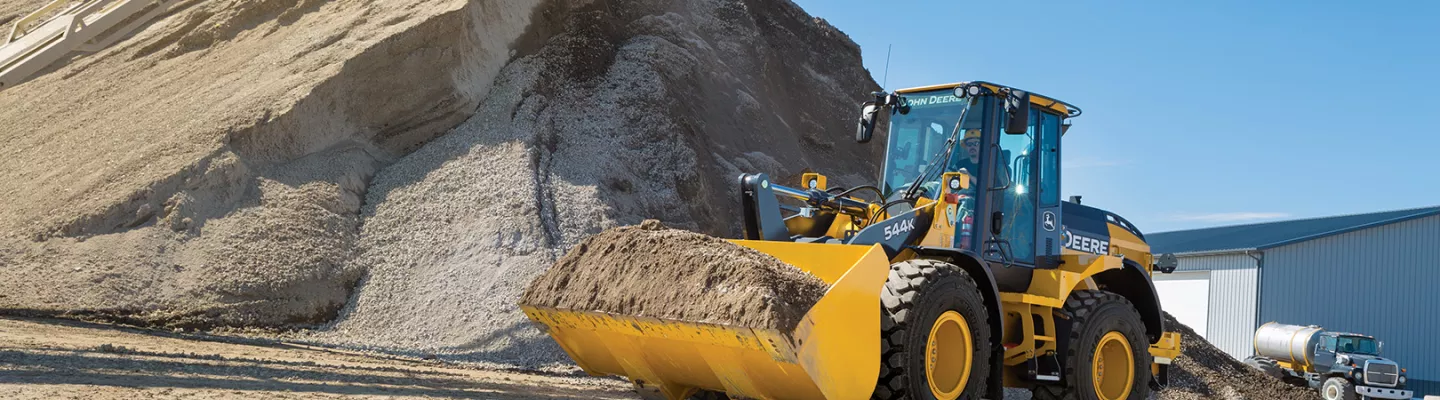
Wheel Loader Hero

How to Operate a Front-End Loader: Driving, Scooping, Grading and Digging

Here are quick tips for using these effective earthmovers.

July 11, 2023
  • How to Use

Article Updated on: September 9, 2026

Front-end loaders are earthmoving machines used to pile debris into dump trucks or move loose materials such as rocks, dirt, snow, wood chips and feed. Popular on construction sites for their versatility, this family of earthmovers includes skid steers, compact track loaders and wheel loaders. They feature a suspended bucket on two hydraulic arms that can be fitted with other attachments for different tasks. Before you rent, learn the basics of how to operate a front-end loader to increase your safety and productivity.


What is a front-end loader?

A front-end loader is a versatile earthmover built for moving loose material like dirt, gravel, snow, wood chips and feed. It uses a suspended bucket on two hydraulic arms and includes machines such as skid steers, track loaders and wheel loaders. Operators rely on front-end loaders to pile debris, scoop, grade and dig on construction sites, farms and municipal worksites.


Which type of front-end loader do I need for my project?

The type of front-end loader you need depends on the type of project you are conducting, the lift capacity you need and the type of terrain you are working on.

Machine Type

Best For

Typical Lift Capacity

Terrain

Wheel Loader

Moving large-volume material on paved or firm surfaces

Up to 24,000 pounds

Flat, stable ground

Skid Steer

Operating in tight spaces with quick maneuvering

400 to 2,900 pounds

Compact jobsites, indoor use

Track Loader

Earthmoving projects on soft or uneven ground

900 to 4,300 pounds

Mud, snow, loose soil

How to use a front-end loader: Training and safety

Operating a front-end loader takes skill and practice. Inexperienced drivers are prone to mistakes that can shorten the life of the machine and cause accidents.

OSHA requires training and certification for all heavy loader operators. Learning how to run a front-end loader is easy with operator training programs that blend online instruction and hands-on skills practice overseen by professional instructors.

Before you start

Call 811, the “before you dig” number, to have the local utility check for underground utilities if your work involves digging. Check the worksite for powerlines, obstructions, holes and uneven ground. Perform a pre-shift inspection of the front-end loader and report any problems to your supervisor. Clear personnel from the area if possible.

How to drive a front-end loader

Every model is different, so review the operator’s manual for your front-end loader. Controls vary depending on the model. Note that some models have wheels and others have tracks.

Here’s a basic overview of how to start a front-end loader and how to run a front-end loader:

  1. Maintain three points of contact when climbing into the loader. Secure your seatbelt and any other safety restraints, and close windows and doors to minimize dust inside the cab.
  2. Put the key in the ignition to start.
  3. Warm up the engine according to the manufacturer’s guidelines.
  4. Turn off the parking brake, then turn on the controls.
  5. Apply pressure on the foot pedals to accelerate (right) and brake (left).
  6. Control the direction with the left joystick or steering wheel, depending on the model.
  7. Use the right joystick to control the arms and bucket.
  8. Check for obstacles before raising or lowering the bucket.
  9. Position the bucket low and tight for stability and a clear view of the worksite.
  10. Drive slowly and use caution when turning to prevent spills and rollovers.
  11. Lower the bucket to the ground and run the engine on idle to cool it before shutdown.
  12. Lock the brakes before leaving the loader.

How to scoop with a front-end loader

A front-end loader can move large volumes of rock, sand, gravel and debris. Smaller skid steer and track loader models can lift between 400 pounds and 4,300 pounds. Larger wheel loader models can handle loads weighing as much as 24,000 pounds.

Operators should take special care when scooping heavy materials. A full bucket shifts the center of balance to the front of the loader and may cause tipping or rolling.

Follow these steps to safely scoop with a front-end loader:

  1. Level and lower the bucket blade so it rests flat on the ground.
  2. Drive straight into the pile while raising the boom to maintain traction.
  3. Curl the bucket and pull back on the boom.
  4. Load the bucket evenly, staying within the loader’s weight capacity. Do not load and turn at the same time, which can cause a rollover.
  5. Level the bucket and lower the boom before reversing from the pile. Never drive with a loaded, raised bucket, as materials can fall on the truck or the operator.
  6. Get close to the dump site before raising the bucket, then drive forward slowly and empty the load.

How to level ground with a front-end loader

A loader fitted with a scoop bucket is effective for grading surfaces. You can use the bucket to scrape and back-drag gravel, mulch and dirt.

Some front-end loaders have a “float” setting that releases the hydraulic boom and allows it to move freely up and down using gravity. This lets the bucket follow the contours of the ground and is particularly useful for grading. To engage the float function, lower the bucket with the blade flat to the ground, then push the boom control lever or joystick all the way forward.

Here’s how to grade with a front-end loader:

  1. Prepare and mark the site.
  2. Clear weeds, grass, brush, trees and large rocks. A rake attachment may help.
  3. Fill the bucket to balance the machine.
  4. To scrape, drive forward with the bucket level to the ground; repeat to shave high spots.
  5. To back-drag, drop the bucket to the ground (use the float position if available) and reverse to smooth.
  6. Repeat to level to the desired grade.

How to dig with a front-end loader

If you don’t have access to an excavator, a front-end loader can be used to dig, saving hours of manual labor. Follow these steps to dig a hole with a front-end loader:

  1. Set the underside of the bucket on the ground.
  2. Tilt the bucket so the front blade is pointed into the surface.
  3. Drive forward, moving the bucket into the dirt, and tilt to scoop.
  4. Lift the bucket above the ground and drive backwards with a full bucket.
  5. Carry the load to desired location, lift and dump.
  6. Lower the bucket, return to the site and repeat.

How to stop spinning wheels

It’s not unusual for tires on wheeled loaders to lose traction and spin in mud, snow or ice or on uneven surfaces when one wheel loses contact with the ground. Spinning wheels will prematurely wear down your tires. To solve this issue, some loaders use a mechanism that “locks” the wheels together on an axle, so they rotate at the same speed. When one wheel spins, all power is transferred to the wheel with the most traction.

Another reason tires spin is using tires with the wrong tread for the surface. Concrete surfaces require a different tire than dirt surfaces.

Choose a front-end loader with United Rentals

Front-end loaders are some of the most efficient machines for moving materials. With proper training, you can use one safely and effectively. Optional attachments such as extendable booms, forks and pipe carriages allow you to reach higher, lift larger loads or transport pipes and conduit once you know how.


Frequently asked questions

How do you operate a front-end loader safely?

Front-end loader operators should complete OSHA-required training and certification, perform a pre-shift inspection and check the worksite for powerlines, holes and obstructions before starting work.

How much weight can a front-end loader lift?

Depending on the model, smaller skid steers and compact track loaders can lift about 400 to 4,300 pounds, while larger wheel loaders can handle loads up to 24,000 pounds.

What is the float function on a front-end loader?

The float setting on a front-end loader releases the hydraulic boom, so it moves freely with the ground's contours. Operators use it for grading and back-dragging tasks.

Can a front-end loader dig a hole?

Yes, operators can tilt the bucket into the surface, scoop and lift to dig. This is often needed when an excavator is not available on the jobsite.


Visit our online marketplace to explore our full line of skid steers, compact track loaders and wheel loaders and find the one that best suits your needs.

  • Facebook Facebook
  • X X
  • Linkedin Linkedin
  • Email Email
  • Print Print
  • Copy Link Copy Link
  • RSS Feed RSS Feed

Was this article helpful?

Yes No

28 out of 31 found this helpful

Trending Articles

How to Cut Concrete Using a Concrete Saw
Contractors: Are You Violating OSHA's Portable Toilet Guidelines?
What is a Mini Excavator Used For? Sizes, Applications and Attachments Explained
Wood Chipper Safety: Tips for Avoiding Accidents and Injuries
Locating Pipes with Acoustics and Mapping Software

Related Equipment

Earthmoving Equipment

Earthmoving Equipment

Earthmoving Equipment

Earthmoving
  • Facebook
  • Linkedin
  • X
  • Youtube

24/7 Customer Care

844.873.4948

  • Mobile App
    • Download for Android
    • Download for Apple
  • Equipment
    • Rent Equipment
    • Buy Equipment
    • Credit Application
    • Rental Protection Plan
    • United Guard™
    • Download Equipment Catalog
  • Solutions & Services
    • Total Control®
    • Specialty Solutions
    • Industry Solutions
    • Customer Equipment Solutions
    • United Academy
  • Support
    • Find a Location
    • Contact Us
    • Rental Equipment Service
  • About Us
    • Corporate Fact Sheet
    • Corporate Responsibility
    • Our Culture
    • Awards & Recognition
    • Resource Center
  • Careers
    • Early Career & Development
    • Events
    • Military
    • Search Jobs
  • Investor Relations
    • Annual Reports
    • Presentations
  • © 2026 United Rentals, Inc.
  • Legal Terms and Conditions
  • Equipment Directory
  • Branch Directory
  • Cookie Settings
United Rentals Home

User account menu

  • 844.873.4948
  • Australasia

    • Australia

    Europe

    • Français
    • Deutsch
    • English
    • Nederlands

    North America

    • English
    • Español
    • Français
  • Sign In / Register
  • Rent
    • All Equipment
    • Popular Rentals
    • Scissor Lifts
    • Boom Lifts
    • Telehandlers
    • Mini Excavators
    • Skid Steers & Track Loaders
    • Rental Resources
    • Rental Protection Plan (RPP)
    • Why Rent with United Rentals
  • Buy
    • All Used Equipment
    • Popular Used Equipment
    • Buy Forklifts
    • Buy Scissor Lifts
    • Buy Boom Lifts
    • Buy Mini Excavators
    • Buy Compressors
    • Buying Resources
    • Financing
    • United Guard™
  • Total Control
    • Account Dashboard
    • Invoices & Payments
    • Items On Rent
    • UR Mobile App
    • About Total Control®
  • Invoices & Payments
    • Invoices
    • Lien releases
    • Apply for credit
  • Locations
    • Find a Location
  • Training
    • Course Catalog
    • Training Credentials
    • United Academy
    • About United Academy
    • Care & Support
    • United Academy - Course Catalog
  • Solutions
    • Worksite Performance Solutions™
    • Specialty Solutions
      • Commercial Trucks
      • Flooring & Facility Solutions
      • Power & HVAC
      • Climate Solutions
      • Fluid Solutions
      • Trench Safety
      • Reliable Onsite Services
      • Tool Solutions
      • Storage Containers & Mobile Offices
      • Communications
      • Industrial Blinds
    • Power & HVAC
    • Climate Solutions
    • Fluid Solutions
    • Trench Safety
    • Trench Engineered Systems
    • Reliable Onsite Services
    • Tool Solutions
    • Storage Containers & Mobile Offices
    • Temporary Industrial Tents
    • Commercial Trucks
    • Flooring & Facility Solutions
    • Ground Protection Matting Solutions
    • Industry Solutions
      • Energy & Utility
      • Chemical
      • Oil & Gas Refining
      • Oilfield Services
      • Civil and Infrastructure
      • Restoration and Remediation
      • Government Solutions
      • Agriculture
    • Energy & Utility
    • Data Centers
    • Renewable Energy
    • Chemical
    • Oil & Gas Refining
    • Oilfield Services
    • Restoration & Remediation
    • Civil & Infrastructure
    • Government Solutions
    • Events & Entertainment
    • Emergency Solutions
    • Emergency Response
  • Services
    • Digital Solutions
    • Total Control®
    • Mobile App
    • Notifications
    • Benchmarking
    • Wedge
    • Downloadable Catalogs
    • Repair & Maintenance Services
    • Owned Equipment Service
    • Rental Equipment Service
    • Training Services
    • United Academy
  • Safety
    • Safety Training
    • Safety Articles
  • Company
    • Resource Center
    • Events
      • Events Calendar
      • Webinar Series
    • In the News
    • Press Releases
    • Investor Relations
      • Annual Report
      • Reports & Proxy Statements
      • Corporate Governance
      • Investor Press Releases
      • Investor Events, Calls & Presentations
      • Research Coverage
      • SEC Filings
    • Careers
      • Search Careers
      • Career Areas
    • Who We Are
    • About Us
      • About Us
      • Our Culture
      • Board of Directors
      • Corporate Leadership
      • Sponsorships & Partnerships
      • Awards & Recognition
      • Corporate Responsibility Report
      • Small Businesses
    • Safety
    • Sustainability
    • Productivity
    • Innovation