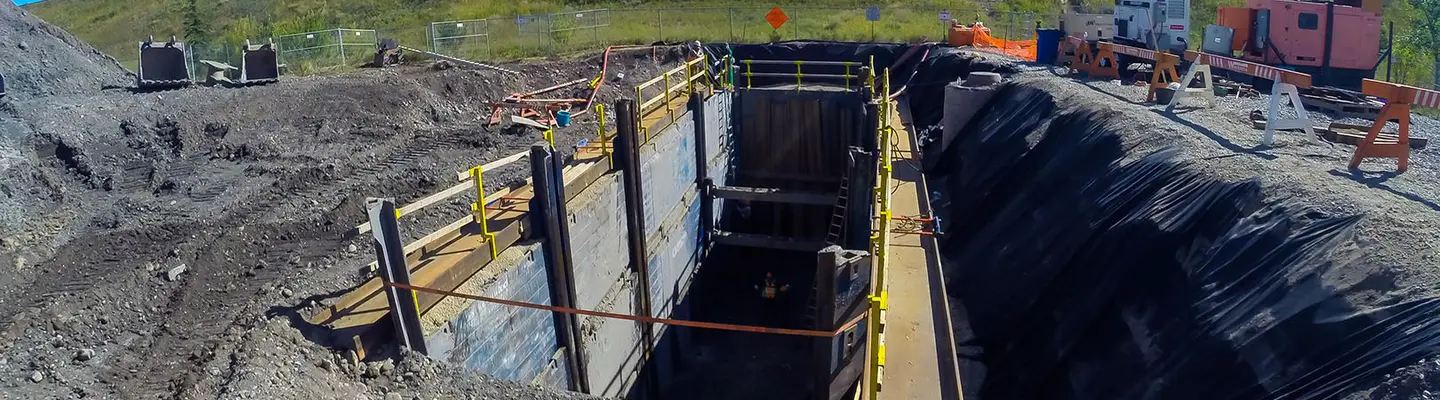
Choosing an excavation shoring system is one of the most important decisions contractors make on any underground project. It isn’t just about protecting workers from cave-ins. Other goals may include stabilizing the surrounding soil, safeguarding nearby utilities and structures, boosting efficiency and ensuring compliance with OSHA shoring requirements while balancing project costs.
With a wide range of shoring system options available, understanding how each system works and where it performs best is critical to achieving optimal project outcomes.
This United Rentals guide breaks down the most commonly used excavation shoring solutions, their advantages and their ideal applications to help contractors identify the best types of shoring for their projects.
Choosing the best shoring system for the job
Every excavation presents unique challenges. Choosing the most effective shoring system requires evaluating factors ranging including depth, soil conditions, surface loads and access dimensions and aligning them with project goals for safety, efficiency and cost control.
United Rentals offers an extensive portfolio of excavation shoring equipment to serve the full spectrum of excavation support needs. In addition, it brings deep knowledge of shoring systems, extensive field experience and in-house shoring designers and engineers who can develop site-specific engineered solutions.
By partnering with United Rentals early in excavation planning, customers can fully consider the best shoring options for a project rather than rely on their typical go-to solution. The process can pay off in time saved, money saved and even lives saved.
 Facebook
 X
 Linkedin
 Email
 Print
 Copy Link
 RSS Feed
